Friday, 29 October 2021

Fair Isle in Spring and Autumn

With Covid-19 still largely preventing internal birding again this year I settled for birding trips up north to Fair Isle during the year. 

In spring I was there from late May to the end of the first week of June with Pete Davis and Clive Johnson and was mostly excellent with a number of good birds but overall numbers of migrants were low, which was a theme throughout the year. 

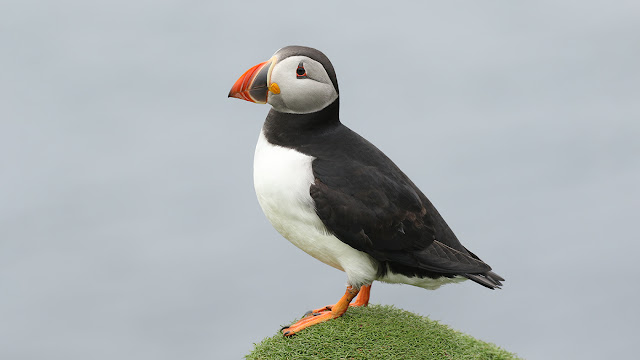
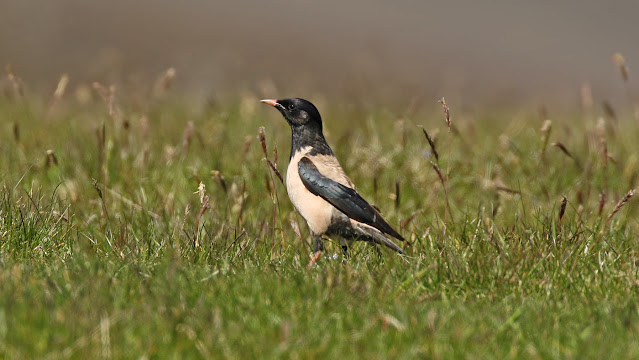
For the spring the highlights were Calandra Lark, Eastern Subalpine Warbler, 3 Rose-coloured Starlings, a Tawny Pipit, a stunning male Bluethroat, more Rustic Buntings you shake a list at, several Icterine and Marsh Warblers, Quail, Wryneck, Red-backed Shrikes, a Red-necked Phalarope, a find in the form of a Byth's Reed Warbler, as well as Puffins, Skua's and other seabirds whilst closed out with a Ring-necked Duck and Lesser Yellowlegs on Shetland. 

I then followed this up with an early autumn, late August, trip. It was a little slower than hoped for but again a few additions to the Fair Isle list were made with the highlights being a Booted Warbler, a lingering Rose-coloured Starling, Barred Warbler, Wood Warblers, a Melodious Warbler and finding an Arctic Warbler however the absolute highlight was the Orca Pod that circled the isle twice one fine day and were seen at extremely close range hunting seals just below the cliffs, stunning. 

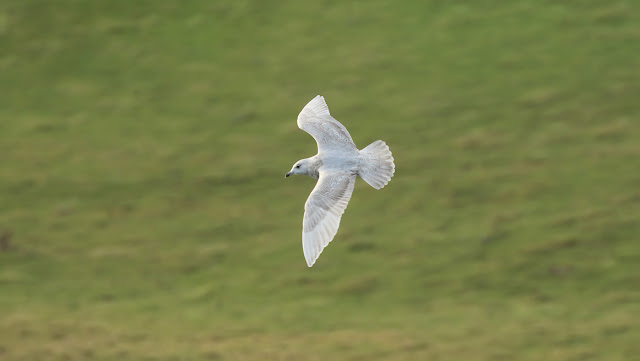
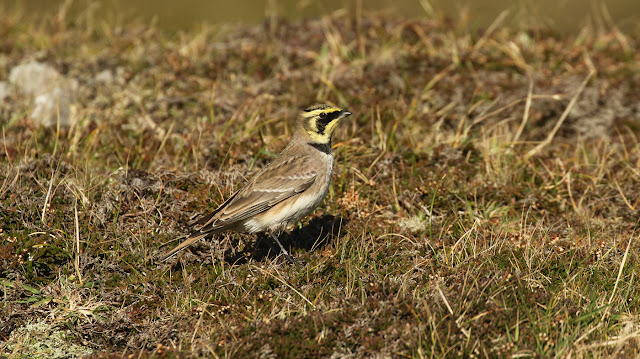
And then finally I had 5 weeks from 23rd September through to 26th October. This was a mixed bag really. Migration was mostly prevented from happening by constant westerly winds but that didn't stop quality birds getting through. By the end of the trip it really felt the season was over. Hightlights from this trip were the White'sThrush caught at the Gully, the Baikal Teal, the truly special views of drakeSurf Scoter, the trapped Daurian Shrike, the lingering Woodchat Shrike, a Red-backed Shrike, Buff-bellied Pipit, a Red-flanked Bluetail, 4 Shorelarks, a Blyths Reed Warbler, 2 Red-breasted Flycatchers, a brief Olive-backed Pipit, Kumliens Gull, Glaucous Gull 4 Little Auks, 2 Snow Geese, a couple of Little Buntings, 

Yellow-browed Warblers and Goldcrests were virtually non existant and I was lucky to see two, maybe three, Yellow-broweds. Winter thrushes appeared after a very brief spell of easterlies and it was impressive to see tens of the thousands of Redwing along with hundreds of Blackbirds and Song Thrush whilst Ring Ouzels and Bramling flocks put in a good show along with a few Long-earted Owls and Woodcock but oddly Fieldfare were low in numbers.

The trip was finally closed out with a Humes Warbler at Boddam on Shetland which was slightly over shadowed by the stunning ghstly Siberian Chiffchaff in the same garden. 

Whilst there should have been a little more quality there was still plenty to keep me going through the year and keep me sane. 

Spring: highlights


August: highights


September and October: highlights


Monday, 5 July 2021

Fritillaries in the Wood

Spent the day yesterday butterflying the local wood which was extremely entertaining with my favourite UK butty, the Silver-washed Fritillary, seen well with about six on the wing. This is new for me at Hockley Woods despite trying for a few years here. 

Also seen were probably about five White Admirals and a bumper late emergence of Heath Fritillaries which seem to be about 3 weeks behind their usual peak emergence. 

Plenty of other fresh looking wings in thw wood with pristince Ringlets and Meadow Browns, Large and Small Skippers and a few Red Admirals and Large Whites.  

Super day.


Tuesday, 4 May 2021

Woodchat Shrike; so close yet so far

With a report of Woodchat Shrike literally 2 minutes up the road from the front door, at Stambridge Mills I went looking, as did a couple of others. I went knowing there was little proper Shrike habitat but a vagrant can always just appear in odd places. Some piles of logs and branches near the fishing ponds looked possible as did the bushes that run away from the cricket pitches along the seawall and the old mill compund but nothing appeared. 

After a couple of hours we gave up wondering if it was genuine or not or just not where we were looking. 

Next morning at around 7:30ish an update was obtained from the finder saying it had been in the horse paddocks the night before and was still present at 7:20pm, when we were still searching Stambrige Mills. Unfortunately the horse paddocks are closer to Rochford Park than the mills so searching there the previous evening was not considered. 

Once I had finished my walk around Doggetts Pits I went straight to the horse paddocks, somewhere where I sometimes walk and had more or less been here a few evenings previously. I passed the horses and walked the hedge line and passed a patch of brambles that I thought 'that looks a likely spot for a shrike' but there was no shrike present. 

I carried on heading towards Stambridge Mills thinking that the bird had almost certainly departed overnight when images of the bird from the previous evening emerged sat on the brambles I had just passed.

I about turned and went back to the gap in the hedge and there on the brambles was the Woodchat Shrike, a stunning male. 

I got some record shots of the bird and then posted on the local grapevine that it was still present and within a few hours all local birders had connected and as the day wore on more and more visitors came. 

It was warm and the bird was actively hunting and feeding and was even heard singing. 

The following day it was cooler and got windier as the day progressed but it continued to show well and by the time I finally left the site around 250 or more birders had come and gone. It was extremely popular. 

There are a lot of images of the bird on Twitter etc but these are amongst my best. Most are wider shots to give a bit more context to the habitat. 

So a pretty rare bird half mile from my front door that was eventually tracked down and enjoyed by many, sweet.


To add to the Mediterranean feel the day before Bowers Marsh had a Glossy Ibis, did the shrike arrive at the same time ?


Monday, 19 April 2021

Twitching an American Sparrow

It's been a long time since I twitched anything but I couldn't resist the West Sussex White-throated Sparrow. 

Click on the below to see a few more images of this bird.


more White-throated Sparrow images here


Saturday, 27 March 2021

Late March 2021

Been birding a fair bit but only a few bits and bobs worth pointing the camera at with the below all coming in the past few days or so. 

The Peregrines at Bowers Marsh put on a spectacular display as they harassed the Avocets, for pure enjoyment of annoying the Avocets by the look of what was going on. 

A confiding Kestrel at Wallasea Island, a garden tick in the form of Ravens at Rochford Hospital, first migrants took shape of Wheatears with a single in Gunners Park and no less than 5 at Fleet head, where there was also a lonesome Pale-bellied Brent Goose. 

Now looking for to the spring and hopefully so 'up north' birding.


Sunday, 14 February 2021

Winter Thrushes

With the country seeing lots of cold weather and snow it was only a matter of time before birds were on the move. As with elsewhere winter thrushes have been appearing locally in very good numbers and my garden has seen more Fieldfares, Redwings and Blackbirds in the past week than in the past 4 years combined. 

As the berries have now been completely stripped from my Rowan I visited Oaken Grange Drive in Southend this morning where a large flock of around 500 Fieldfare are busy laying into the berries. 

These are amongst the most photogenic local Fieldfares I've ever had. 

Whilst not the pulse racing rarity one hopes for they vertainly made up for it in spectacle and some were so well marked and confiding that I found it difficult to drag myself away. 


Sunday, 3 January 2021

2020 - A difficult year in reflection

So now that 2020 has been seen out and we are into what looks like another difficult year ahead what was the highlights of the past 12 months. 

The year start okay with a few bits from local birding with an excellent January day to Abberton Reservoir where Goosanders performed their socks off and I saw my first ever UK January Swallow. The Black-throated Diver there also proved to be my only one of the year.

Towards the end of January a longish weekend with friend Lee was taken to Israel to try and catch up on a few missing birds and despite missing Pallid Scops Owl it was a resounding success with personal highlights being a bucket load of various wheatear species with Finsch's, Isabelline, Desert, Basalt, Northern, White-crowned, Mourning and White-crowned Black. The displaying Temminck's Larks on HaMeishar Plains stole the show from the Thick-billed Larks there also, Crested Honey Buzzards were seen, early migratory Steppe Eagles, well the list will go on and on. 

Shortly after this however this turned downwards and my planned spring trips to Texas, Israel and Fair Isle were all cancelled due to the growing issue of the Coronavirus. The National Lockdown meant birding anywhere other than the garden was frowned upon by many Twitter folk who were convinced that if they were not going out then no one else should be either. 

To my rescue I was able to spend early morning visits to my local Wildlife Area called Doggetts Pits, though it is usually over run by fishermen and really the name Doggetts Wildlife Area is secondary to the fishing that usually goes on here. Without the fishermen here en-mass there was actually wildlife and I racked up many species I have not seen here previously, probably because of the over use by fishermen. I was able to see the arrival of migrants through the weeks here from single Blackcap through to counts into the twenties and watching displaying Sedge Warblers, seeing passage Pochards for first time here and having a regular Cetti's Warbler singing from the sallow in the middle of the main lake. 

The walk up the lane past the farm also gave me additional species with the pick of the bunch being the long staying male Ring Ouzel. 

As I was by now working from home I was able to keep an eye on the garden and a few additions were made but best were the ever increasing numbers of Buzzards and no less than three Red Kites. 

Once restrictions were eased birding further afield was possible but a little to late for the best of the spring locally but at least Nightingales were watched singing and Turtle Doves caught up with but it did feel that we missed the best of season, until at least till the Marsh Warbler at Benfleet Downs was found and early 5:30am visits resulted in great views and lots of song, I think we ended up counting at least 21 species the bird was mimicing. 

Local butterflies were lacking a little but some of the commoner ones were enjoyed, I especially liked the Orange-tips at Bowers Marsh. 

Early autumn saw some return passage of waders with Curlew and Wood Sandpipers and a few Little Stints whilst Gunners Park had an early wave of Pied Flycatchers and it was enjoyable to watch multiple newly arrived birds actrively feeding in the secret dell. 

As the autumn progressed Covid cases were starting to creep slowly back up so my trip to Fair Isle at the end of August was very welcomed and the first time I've been here in that month, usually I would have been at the Birdfair but that had been cancelled like so many other events. 

Fair Isle didn't produce a large fall of migrants but it was a very enjoyable trip none the less with Red-backed Shrikes, Barred Warblers and several scarcities knocking around. Best bird of the trip was the Western Bonelli's Warbler at Midway, a couple of Rose-coloured Starlings and the self found Arctic Warbler on the morning I was due to leave. 

I was then back on Fair Isle two weeks later for a 5 weeks stay which at times was both excillerating and frustrating. Lots of migrants around and some good rarities but still felt we missed out on a biggy which the other northern isles seemed to be getting. Still those few of us on the island kept plugging away and I think I only missed one decent bird during my visit, though arguably the rariest for the island for the autumn,the Brown Shrike. 

The autumn here then gave me the much needed recharge with highlights being two White's Thrushes, Siberian Stonechat (self found), two Red-throated Pipits (self found one), Citrine Wagtail (self found at Narrvisgill on a very windy day), Red-flanked Bluetail, White-tailed Eagle, Rustic Bunting, Dusky Warbler (self found), Little Auk, Red-breasted Flycatchers, stacks of Yellow-browed Warblers, two Hornemann's Arctic Redpolls, Great Tit, Orca's, Risso Dolphins, Glaucous Gull and so on. In 5 weeks I walked around 248miles on an island that is 3miles x 1mile. Felt fitter when I left and had dropped around a stone in weight. 

At home then with rising Covid Cases birding away from local areas was again off the agenda so had to make do with now looking for winter geese and successully found my own Pink-footed, White-fronted and Tundra Bean Geese. 

I came across the first Caspian Gull for the year for the local area at Fleet Head whilst I also found a wintering Yellow-legged Gull up river at Hullbridge so the year was seen out respectfully at a year list of 224, I thought at the beginning of August I would not make the annual target of 200 so it wasn't bad in that respect. 

2021 is looking like it will be similar to 2020 in terms of travel restrictions and again Twitter folk are already moaning about birders travelling a few miles from their front doors to get out side, I dispare at some of the people on Twitter and like the beginning of lockdown last March I may have to leave it alone for my own sanity. 

If I can somehow pick my bird this is what I would come up with;

SOG area bird of the year


Self-found bird of the year


UK bird of the year


Overseas birds of the year